 Skip to content
Kenya safari destination
Maasai Mara National Reserve
Kenya’s big cat country and the stage for the Great Migration. Plan your Masai Mara safari with a Nairobi team that knows the reserve well.
Location
Narok County, Kenya
Size
About 1,510 sq km
Ideal stay
2 to 4 nights
Best time
July to October
Famous for
Great Migration and big cats
Where Kenya’s savannah meets the Serengeti
The Maasai Mara National Reserve, often spelled Masai Mara, covers roughly 1,510 square kilometres of rolling grassland in southwest Kenya. Its southern boundary runs straight into Tanzania’s Serengeti National Park, and together the two form one ecosystem that supports some of the densest wildlife populations in Africa.
The Mara and Talek rivers wind across the plains, lined with fig and acacia woodland where leopards rest through the heat of the day. Out on the open grass, lion prides, cheetahs and hyenas follow the topi, zebra and gazelle that live here all year. Between July and October the Great Migration herds push north into the Mara, and the river crossings become the most dramatic wildlife spectacle in East Africa.
Around the reserve, Maasai-owned conservancies such as Mara North, Olare Motorogi and Naboisho offer quieter game viewing with fewer vehicles. Whether you join a 2 day Masai Mara budget safari from Nairobi or spend a week between camps, a Masai Mara safari rewards every kind of traveller.


Why a Masai Mara safari belongs on your Kenya itinerary
Six reasons the Mara sits at the top of most first-time visitors’ lists, and keeps drawing people back.
The Great Migration
Herds of wildebeest and zebra cross the Mara River between July and October, watched by crocodiles waiting below the banks.
Big cat country
Lion prides, cheetahs on the open plains and leopards in the riverine forest give the Mara its reputation for big cats.
The Big Five
Elephant, buffalo, lion and leopard are seen regularly, with a small population of black rhino, most often in the Mara Triangle.
Wildlife all year
Resident herds of topi, zebra, giraffe and gazelle mean rewarding game drives in every month, not only during the migration.
Maasai culture
Maasai families still graze their cattle around the reserve, and a village visit offers a respectful look at their daily life.
Balloon safaris at dawn
Drift over the plains at sunrise in a hot air balloon, then land for a full breakfast out in the bush.
When to visit the Maasai Mara
The Mara has good game viewing all year. Choose the season that matches what you most want to see and how much you plan to spend.
July to October
Migration season
The herds arrive and river crossings peak, usually in August and September. This is the busiest time of year, so book camps and lodges early.
- Peak season rates
January to February
Short dry season
Warm, clear days and fewer vehicles. Resident wildlife is easy to find and big cat sightings are excellent.
- Mid season rates
March to May
Long rains
Green plains, dramatic skies and lower lodge rates. Some camps close in April and May, and a few tracks become muddy.
- Lowest rates of the year
November to December
Short rains
Brief afternoon showers, fresh grazing and newly arrived migrant birds. A good value window before the holiday season.
- Good value rates
Wildlife you can expect to see in the Maasai Mara
These are the animals most visitors meet on a game drive. Leopard, hyena, topi, black rhino and more than 450 bird species add to the list.

- Big Five
Lion
The Mara is home to some of Africa’s best-studied lion prides, often found resting in the open grass.
- Open grassland
- Most active at dawn and dusk

- Big Five
Elephant
Breeding herds move between the plains and the woodland that lines the rivers.
- Riverine woodland
- Seen all year

- Big cat
Cheetah
The open short-grass plains suit the world’s fastest land animal, and guides often find mothers with cubs.
- Short-grass plains
- Hunts during the day

- Great Migration
Wildebeest
Vast herds arrive with the migration, alongside the zebra and gazelle that travel with them.
- Plains and Mara River
- July to October
- Big Five
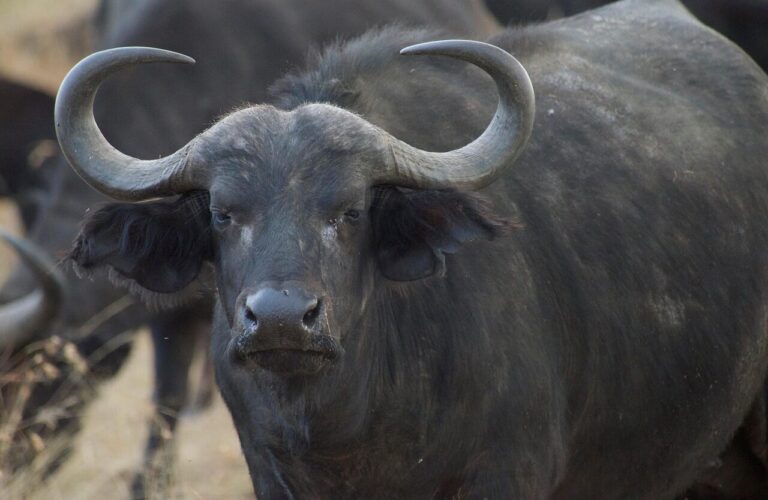
Cape buffalo
Large herds graze close to water, and lone old bulls are a common sight near the marshes.
- Marshes and water
- Seen all year

- River life
Hippo
Pods crowd the deeper pools of the Mara River by day and leave the water to graze after dark.
- Mara and Talek rivers
- Seen all year

- Resident
Maasai giraffe
Recognised by its jagged, leaf-shaped patches, it browses the acacia trees across the reserve.
- Acacia woodland
- Seen all year
Things to do on a Masai Mara safari
Game drives are the heart of every visit, but the Mara has plenty more to fill the hours between them.
Guided game drives
Head out at sunrise and again in the late afternoon in a pop-up roof vehicle, with a guide who reads the plains and keeps you in the right place for photographs.
Hot air balloon safari
Lift off at dawn for about an hour above the herds, followed by a bush breakfast where you land.
Follow the migration
Spend long mornings with the herds and wait by the Mara River for a crossing.
Track big cats
Watch lion prides and cheetah families, and learn how guides find them each day.
Maasai village visit
Meet Maasai families, see how a manyatta is built and learn the stories behind the jumping dance and beadwork.
Planning your Masai Mara safari
Practical details to help you decide how to reach the reserve, where to stay and what to prepare before you go.
Getting to the Mara
- By road: about 270 km from Nairobi, a drive of 5 to 6 hours through Narok town, with a stop at the Great Rift Valley viewpoint.
- By air: scheduled light aircraft fly daily from Wilson Airport in Nairobi to airstrips in the reserve in about 45 minutes to an hour.
- Group joining safaris: shared departures from Nairobi are the most affordable way to reach the Mara, ideal for solo travellers and smaller budgets.
Where to stay
- Inside the reserve: lodges and tented camps close to the rivers and migration routes, so less of your day is spent driving.
- Private conservancies: exclusive camps with limited vehicles, plus night drives and guided walks that are not allowed in the main reserve.
- Budget camps: comfortable tented camps near the Talek and Sekenani gates keep costs down on a Masai Mara budget safari.
Good to know
- Park fees: charged per person for every 24 hours in the reserve, with rates that change by season. Check whether fees are included when comparing quotes.
- What to pack: warm layers for early drives, a sun hat, neutral colours and a pair of binoculars.
- Health: the Mara is in a malaria area, so speak to your doctor about prevention before you travel.
Masai Mara safari packages
Budget, group joining and private tours that include the Maasai Mara, from a 2 day trip out of Nairobi to longer circuits across Kenya.
Maasai Mara safari questions
Answers to the questions travellers ask us most before they book. Still unsure? Send us your question and our team will reply.
Where is the Maasai Mara National Reserve?
The reserve lies in Narok County in southwest Kenya, about 270 km west of Nairobi. It shares its southern border with the Serengeti in Tanzania, and together they form the Mara-Serengeti ecosystem.
How many days do you need in the Masai Mara?
Three nights is ideal for most travellers, giving you several full days of game drives. A 2 day Masai Mara safari from Nairobi is popular on a tight schedule, although much of the first and last day is spent on the road.
When is the best time to see the Great Migration in the Masai Mara?
The herds usually reach the Mara in July and stay until around October. River crossings are most frequent in August and September, although the exact timing depends on the rains each year.
How do I get from Nairobi to the Masai Mara?
Most safaris travel by road in a 4×4 or safari van, a journey of 5 to 6 hours. For a faster option, daily flights from Wilson Airport reach the reserve’s airstrips in about an hour.
Is a budget Masai Mara safari worth it?
Yes. A budget or group joining safari visits the same reserve and the same wildlife as a luxury trip. You save by sharing the vehicle and staying in simpler tented camps, while still enjoying full game drives with an experienced guide.
Can you see the Big Five in the Masai Mara?
Lion, leopard, elephant and buffalo are seen often. Black rhino live in the reserve in small numbers and are harder to find, so seeing all five on one trip takes a little luck.
Can the Masai Mara be combined with other parks?
The Mara pairs well with Lake Nakuru and Lake Naivasha on the way back to Nairobi, with Amboseli for elephants beneath Kilimanjaro, or with the Serengeti for a combined Kenya and Tanzania safari.
Start planning your Masai Mara safari
Tell us your dates, group size and budget, and our Nairobi team will put together a Maasai Mara itinerary that fits.
